
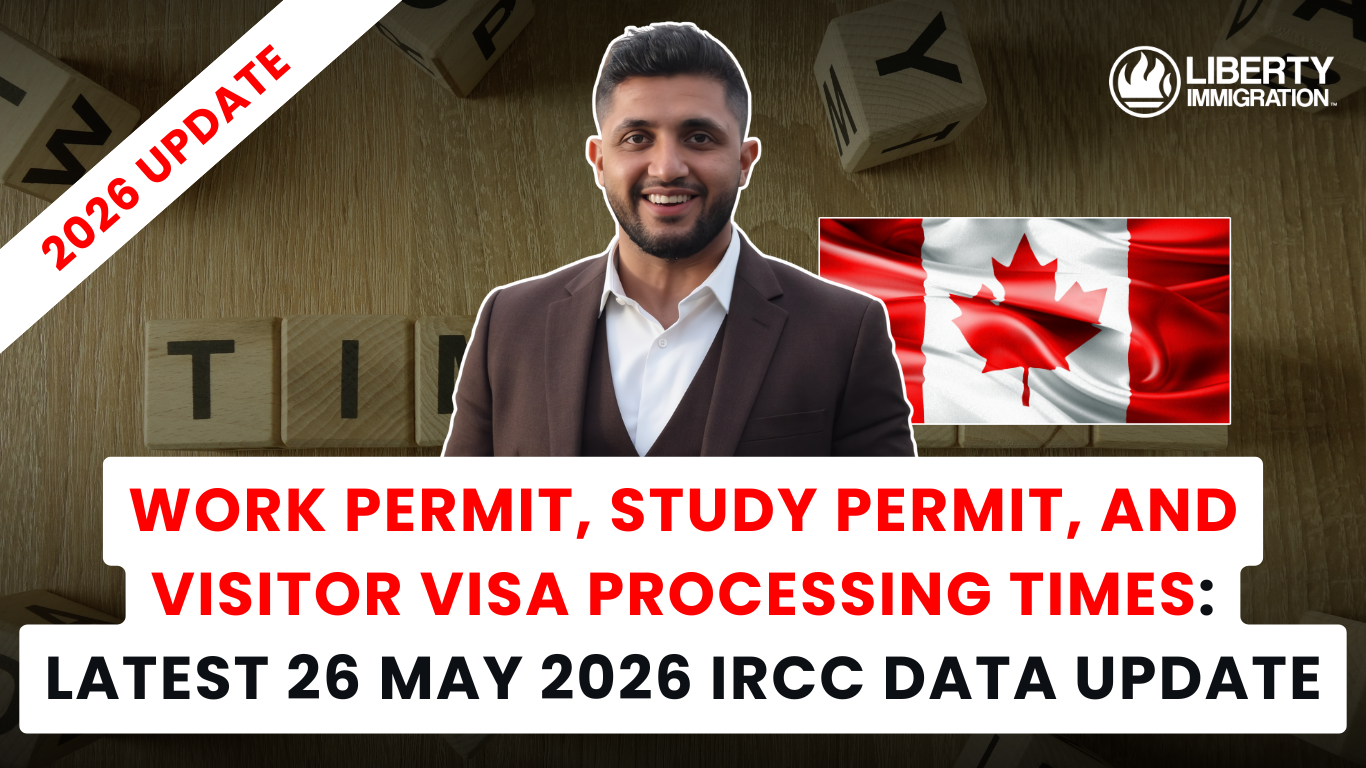
Work Permit, Study Permit, and Visitor Visa Processing Times: Latest 26 May 2026 IRCC Data Update
Executive Summary: Weekly Temporary Residence Performance
Immigration, Refugees and Citizenship Canada (IRCC) has updated its operational processing data for the weekly cycle ending May 26, 2026. The latest database metrics show a clear divergence between application channels. While inland temporary extensions show slight structural reductions, several major visa-issuing offices abroad are dealing with increased processing backlogs. This comprehensive review examines the latest changes to help you track your application's timeline accurately. RCIC Vineet reviews the key adjustments:
- Work Permit Discrepancy: Overseas wait times have increased significantly, highlighted by a sudden four-week spike for Nigeria-based applications and a minor increase for India.
- Visitor Visa Backlog Surge: In-Canada temporary resident visa (TRV) processing times experienced a sharp increase, jumping by nine days over the previous week's baseline.
- Study Permit Stability: Student queues remain largely unchanged across most tracked regions, with the Philippines showing the only notable improvement of a one-week decline.
- Super Visa Relief: Parents and grandparents applying from the United States saw significant timeline relief, with processing times dropping by nine days.
Work Permit, Study Permit, and Visitor Visa Processing Times: Latest 26 May 2026 IRCC Data Update
For international applicants managing temporary moves to Canada, tracking fluctuations in weekly processing times is essential to planning your relocation strategy. On May 26, 2026, IRCC updated its official data registry across all temporary residence categories. The latest figures show that while the department has made modest progress in clearing select backlogs, unexpected processing strains continue to impact critical overseas application corridors.
These data updates highlight why relying on outdated timeline estimates can disrupt your relocation plans. Because application processing speeds fluctuate constantly based on seasonal demand, staffing capacity, and regional office backlogs, your real-world wait time may differ significantly from historical averages. Reviewing these weekly data shifts is vital to help you manage your submission expectations effectively.
As a Regulated Canadian Immigration Consultant (RCIC), I continuously analyze these data releases to keep client profiles properly positioned. Below is the definitive, stream-by-stream comparative review matching the May 26 metrics directly against the previous May 20 baseline numbers.
Is Your Relocation Impacted by Shifting Processing Times? Book an Expert RCIC Profile Vetting Session1. Work Permit Wait Times 2026: Regional Breakdown
The latest data shows that overseas work permit processing centers are dealing with increased application volumes. Applications routed through the regional office in Nigeria faced the largest delay, with standard processing times increasing by a full month. Similarly, India-based files saw a one-week increase. Conversely, in-Canada work permit extensions showed modest progress, clearing five days from the previous week's average.
Review the exact comparative data metrics for work permit processing below:
| Applicant Sourcing Country Location | Current Processing Wait Time (May 26) | Previous Processing Wait Time (May 20) | Net Weekly Operational Variance |
|---|---|---|---|
| Inside Canada (Extensions / Initial) | 201 Days | 206 Days | - 5 Days (Modest Progress) |
| India | 10 Weeks | 9 Weeks | + 1 Week (Increased Delay) |
| Pakistan | 6 Weeks | 6 Weeks | Stagnant / No Variance |
| Nigeria | 16 Weeks | 12 Weeks | + 4 Weeks (Significant Spike) |
| United States | 5 Weeks | 5 Weeks | Stagnant / No Variance |
| Philippines | 8 Weeks | 8 Weeks | Stagnant / No Variance |
IRCC maintains strict internal benchmarks for processing times under normal operational conditions:
• In-Canada Submissions: Stated service standard of 120 days.
• Outside Canada Submissions: Stated service standard of 60 days.
2. Study Permit Processing Updates: Core Student Channels
The student application queue showed high structural stability throughout the current weekly tracking cycle. Most major sourcing hubs saw no changes to their processing timelines, reflecting steady output. The only regional improvement occurred within the Philippines-based processing stream, which successfully shaved one week off its standard average.
Review the verified **study permit processing updates** dataset below:
| Applicant Sourcing Country Location | Current Processing Wait Time (May 26) | Previous Processing Wait Time (May 20) | Net Weekly Operational Variance |
|---|---|---|---|
| Inside Canada (Extensions / Initial) | 6 Weeks | 6 Weeks | Stagnant / No Variance |
| India | 4 Weeks | 4 Weeks | Stagnant / No Variance |
| Pakistan | 7 Weeks | 7 Weeks | Stagnant / No Variance |
| Nigeria | 6 Weeks | 6 Weeks | Stagnant / No Variance |
| United States | 5 Weeks | 5 Weeks | Stagnant / No Variance |
| Philippines | 4 Weeks | 5 Weeks | - 1 Week (Improved Efficiency) |
• In-Canada Submissions: Stated service standard of 120 days.
• Outside Canada Submissions: Stated service standard of 60 days.
3. Visitor Visa Wait Times Inside Canada and Abroad
The temporary visitor entry stream experienced a sharp increase in processing times this week. The **visitor visa wait times inside Canada** stream saw the most notable change, expanding from 16 days to 25 days—a nine-day increase in one week. Overseas, minor score increases impacted the United States and Philippines channels, while Pakistan recorded the only timeline reduction.
Review the exact comparative data metrics for visitor visa processing below:
| Applicant Sourcing Country Location | Current Processing Wait Time (May 26) | Previous Processing Wait Time (May 20) | Net Weekly Operational Variance |
|---|---|---|---|
| Inside Canada Applications | 25 Days | 16 Days | + 9 Days (Significant Backlog Creep) |
| India | 28 Days | 28 Days | Stagnant / No Variance |
| Pakistan | 49 Days | 50 Days | - 1 Day (Minor Progress) |
| Nigeria | 48 Days | 48 Days | Stagnant / No Variance |
| United States | 26 Days | 25 Days | + 1 Day (Minor Delay) |
| Philippines | 21 Days | 20 Days | + 1 Day (Minor Delay) |
• In-Canada Submissions: N/A (No formal statutory benchmark defined).
• Outside Canada Submissions: Stated service standard of 14 days.
4. Super Visa Processing Drop 2026: Parent & Grandparent Entry
The specialized entry path for parents and grandparents showed widespread efficiency gains this week. Except for the Philippines, every tracked regional visa office cut down its standard processing times. US-based applicants experienced the largest benefit, with processing times dropping by nine days.
Review the official super visa processing data below:
| Applicant Sourcing Country Location* | Current Processing Wait Time (May 26) | Previous Processing Wait Time (May 20) | Net Weekly Operational Variance |
|---|---|---|---|
| India | 116 Days | 117 Days | - 1 Day (Minor Progress) |
| Pakistan | 74 Days | 75 Days | - 1 Day (Minor Progress) |
| Nigeria | 36 Days | 37 Days | - 1 Day (Minor Progress) |
| United States | 106 Days | 115 Days | - 9 Days (Significant Progress) |
| Philippines | 33 Days | 32 Days | + 1 Day (Minor Delay) |
*Crucial Note: Under regulatory guidelines, candidates are completely prohibited from filing a Super Visa application from within Canadian borders. All submissions must be routed through overseas visa offices. The statutory service standard for this category is fixed at 112 days.*
5. Compliance Nuance: Understanding Estimates vs. Service Standards
To accurately plan your move, you must understand the distinction between active processing times and official service standards under current guidelines. Sourcing data from the official channels shows that the two metrics serve completely different administrative functions:
IRCC Processing Estimates (Dynamic Profiles)
These values represent changing operational reality and are updated weekly or monthly. IRCC uses two calculation models: *Historical Processing Estimates*, which reflect how long it took to finalize 80% of applications in a given category over recent months, and *Forward-Looking Processing Estimates*, which factor in current application backlogs and active office capacities to project processing lengths for files submitted today.
IRCC Service Standards (Fixed Benchmarks)
These are the department's long-term internal targets for processing files under normal conditions. Sourcing the regulatory frameworks reveals that the **IRCC service standards vs processing times** divide has widened significantly over recent years. While active processing windows adjust weekly to fit inventory depths, core temporary residence service standards have remained unchanged since their last updates in 2018–2019. This means an application can exceed its target standard without necessarily being considered delayed relative to current operational averages.
Navigate Evolving Processing Windows Safely
With work permit processing times spiking across overseas offices and inland visitor visa backlogs growing by nine days this week, strategic file preparation is essential. Let our experienced professional team, led by RCIC Vineet, evaluate your profile, verify your document checklists, and guide your temporary resident submission to help minimize the risk of unexpected processing delays.
Book Your Free Temporary Residence Strategy AuditTop 5 FAQs: Sourcing the May 26 IRCC Processing Times
1. Why did the Nigeria-based work permit processing time experience a four-week spike?
The timeline increase reflects localized inventory shifts and increased application volumes routed through that specific regional processing hub, which pushed standard processing times from 12 weeks to 16 weeks within a single weekly tracking cycle.
2. What is the core difference between an IRCC processing estimate and an official service standard?
Processing estimates are dynamic, weekly updated projections that reflect active backlog depths and regional office capacities. Service standards are fixed, internal performance benchmarks established by the department (last updated in 2018–2019) that define target timelines for closing 80% of applications under normal conditions.
3. Can I submit an application for a Super Visa from inside Canadian borders to bypass wait times?
No. Under immigration rules, applicants are completely prohibited from applying for a Super Visa from within Canada. All files must be submitted and processed through an overseas visa office matching your country of residence or citizenship.
4. Why did the inside-Canada visitor visa processing time expand by nine days this week?
The nine-day increase (jumping from 16 to 25 days) indicates localized processing pressures and an influx of new in-Canada extensions matching seasonal travel trends, which extended standard processing times for inside-Canada TRV queues.
5. Does an application taking longer than the published processing time mean it will be refused?
No. Published processing times are statistical averages, not hard deadlines. An application may take longer due to case complexity, background screening requirements, or the need for verification checks, without indicating any increased risk of refusal.
More in Temporary Residence & Sourcing Regulations
- IRCC Backlog Report: Express Entry Processing Backlog Drops to Historic Low
- Express Entry Draw Pace: Analyzing General Inventory Decelerations in Late 2026
- Fast-Track Air Travel: Canada Drops Visa Mandate for Vetted SE Asian Nationals
- One Year Later: Evaluating the Impact of Immigration Minister Lena Diab's System Overhaul
- Bill C-3 Backlog Impact: Proof of Citizenship Wait Times Solidify at 12 Months
© 2026 Liberty Immigration. All rights reserved. | Book an RCIC Consultation
Related Blogs:


Written By
Vineet Tiwari
Vineet is a caring and creative leader who has lived in India, Oman, UAE, and Canada, giving him a rich multicultural perspective. His commitment to physical fitness keeps him energetic and focused. Vineet's dedication to his clients is evident as he often takes calls on weekends, ensuring they always feel supported and valued. His diverse background and unwavering availability help build strong, trusting relationships with our clients.
