
Official Update: IRCC Temporary Residence Processing Times for May 2026 Released
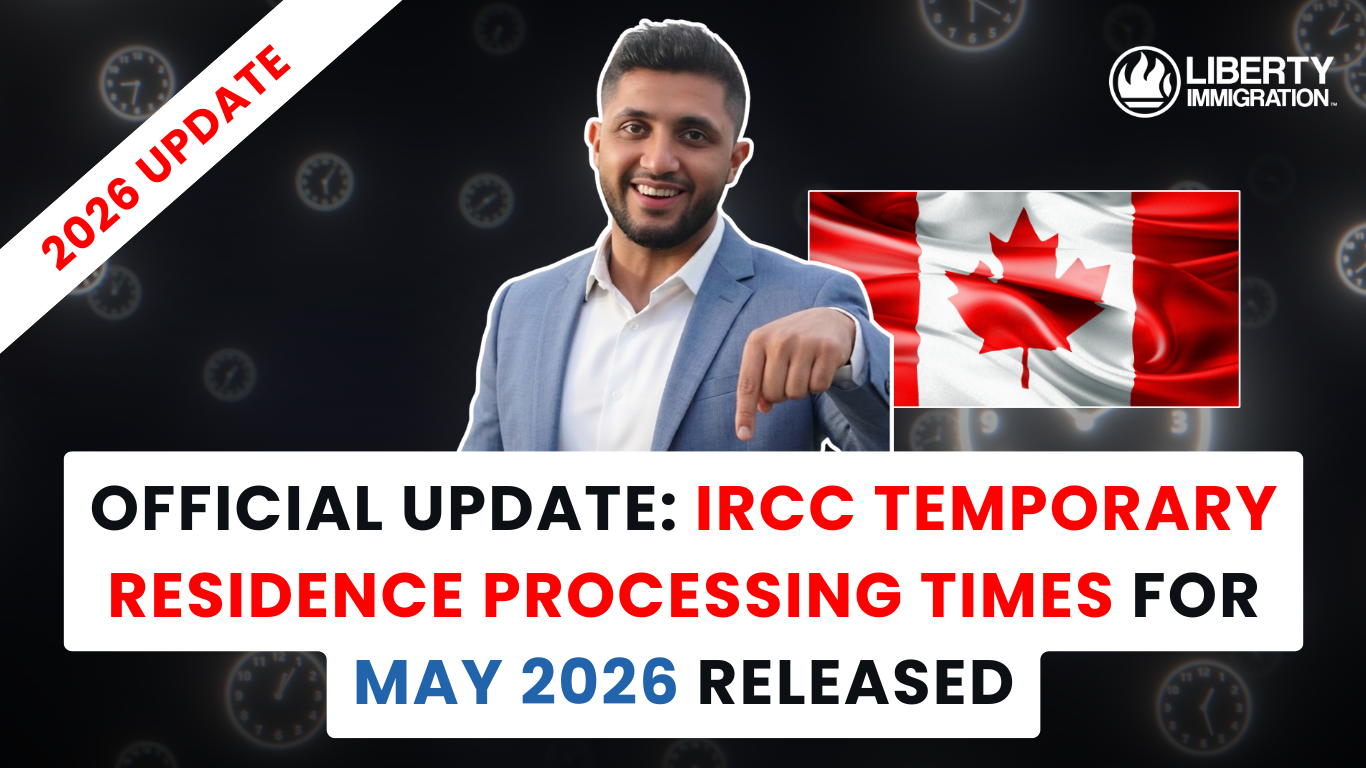
Executive Summary: TR Wait-Time Multi-Tier Trends
On May 20, 2026, Immigration, Refugees and Citizenship Canada (IRCC) updated its formal calculation matrices for newly submitted temporary status categories. The late May data drop reveals a significant divergence in timeline behavior across geographic source regions. While applicants from India and Pakistan benefit from noticeable backlog clearing, candidates tracking from West Africa and the United States face lengthening review delays. RCIC Vineet reviews the structural adjustments documented between May 6 and May 20, 2026.
- South Asian Acceleration: Indian parent and grandparent applicants see Super Visa processing timelines drop by 43 days, while Pakistani study permit wait times decrease by a full month.
- West African Squeeze: Nigerian-based work permit streams face an immediate six-week processing increase, doubling previous operational timelines.
- Summer Travel Creep: Temporary Resident Visa (TRV) queues for general visitors show a modest increase across all global processing points due to seasonal summer demand.
- The Core Tracking Principle: Processing times remain dynamic indicators of inventory volume, entirely separate from IRCC's internal, unchanged statutory service standards.
Official Update: IRCC Temporary Residence Processing Times for May 2026 Released
Navigating the entry gates of Canadian immigration requires a data-driven approach to active queue patterns. On May 20, 2026, IRCC updated its operational statistics for calculating IRCC temporary residence processing times. For international students, global business consultants, and families planning visits, this mid-month data drop provides a realistic look at how quickly applications are moving through specific visa offices.
The latest data indicates that processing queues are not moving uniformly across the globe. Visas tracking through South Asian operational centers are moving noticeably faster, driven by targeted technical enhancements. Conversely, processing queues handling files from West Africa and the United States are seeing increased wait times due to secondary completeness screenings and local capacity limits.
As a Regulated Canadian Immigration Consultant (RCIC), I advise clients that these numbers represent current system capacity, not a fixed guarantee. Below is the complete structural breakdown comparing the May 20 data against the previous May 6 baseline across all four primary temporary entry classes.
Stuck in an In-Canada Work Permit Backlog? Book a Professional Strategy Consultation1. Work Permit Processing Queues: Global Variations
Work permit wait times show varied performance across major source countries over this two-week tracking window. Candidates moving through Pakistan centers benefit from a two-week reduction, breaking a month-long stall that began in late April. Meanwhile, the processing line for Nigerian applications experienced a significant six-week jump, doubling the wait time for incoming submissions.
Review the verified baseline numbers below to evaluate your specific country's processing path:
| Applicant Country of Origin | Current Processing Wait (May 20) | Previous Processing Wait (May 6) | Net Internal Queue Shift Length |
|---|---|---|---|
| Inside Canada (Initial / Extension) | 206 Days | 212 Days | 6 Days Accelerated |
| India | 9 Weeks | 9 Weeks | Stable Baseline |
| Pakistan | 6 Weeks | 8 Weeks | 2 Weeks Accelerated |
| Nigeria | 12 Weeks | 6 Weeks | 6 Weeks Delayed |
| United States | 5 Weeks | 5 Weeks | Stable Baseline |
| Philippines | 8 Weeks | 8 Weeks | Stable Baseline |
IRCC's internal operational service standard targets dictate that in-Canada work permit extensions should be finalized within 120 days, and outside-Canada applications within 60 days. In May 2026, in-Canada files are tracking at **206 days**, significantly exceeding the department's stated service benchmark.
2. Study Permit Queues: Major Adjustments in Pakistan
For international students tracking the late May cycle, the data drop shows notable shifts. While Nigerian study permit applications saw a modest one-week increase, processing centers handling Pakistani files successfully reduced wait times by a full month, cutting the queue down to a 7-week average standard.
| Applicant Country of Origin | Current Processing Wait (May 20) | Previous Processing Wait (May 6) | Net Internal Queue Shift Length |
|---|---|---|---|
| Inside Canada (Initial / Extension) | 6 Weeks | 6 Weeks | Stable Baseline |
| India | 4 Weeks | 4 Weeks | Stable Baseline |
| Pakistan | 7 Weeks | 11 Weeks | 4 Weeks (1 Month) Accelerated |
| Nigeria | 6 Weeks | 5 Weeks | 1 Week Delayed |
| United States | 5 Weeks | 5 Weeks | Stable Baseline |
| Philippines | 5 Weeks | 5 Weeks | Stable Baseline |
Official Service Target: The formal benchmark for study authorizations remains pinned at 120 days for domestic updates and 60 days for standard out-of-country applications.
3. Visitor Visa (TRV) Queues: Seasonal Summer Creep
With peak summer travel approaching, general visitor visa timelines are experiencing minor increases. Across almost all tracked regional offices, review speeds slowed by between one and five days. Pakistan-based processing centers were the exception, maintaining a stable 50-day baseline.
| Applicant Country of Origin | Current Processing Wait (May 20) | Previous Processing Wait (May 6) | Net Internal Queue Shift Length |
|---|---|---|---|
| Inside Canada | 16 Days | 11 Days | 5 Days Delayed |
| India | 28 Days | 27 Days | 1 Day Delayed |
| Pakistan | 50 Days | 50 Days | Stable Baseline |
| Nigeria | 48 Days | 47 Days | 1 Day Delayed |
| United States | 25 Days | 22 Days | 3 Days Delayed |
| Philippines | 20 Days | 18 Days | 2 Days Delayed |
Official Service Target: IRCC seeks to process standard overseas visitor visas within a 14-day turnaround target, though ongoing seasonal volumes regularly push active timelines beyond that benchmark.
4. Parent and Grandparent Super Visas: Significant Progress in South Asia
The most positive news in the late May data drop centers on Parent and Grandparent Super Visa processing. Indian and Pakistani applicants saw substantial reductions of 43 days and 32 days respectively. Conversely, processing lines for U.S.-based applications slowed, with wait times increasing by nearly two weeks.
| Applicant Country of Origin | Current Processing Wait (May 20) | Previous Processing Wait (May 6) | Net Internal Queue Shift Length |
|---|---|---|---|
| India | 117 Days | 160 Days | 43 Days Accelerated |
| Pakistan | 75 Days | 107 Days | 32 Days Accelerated |
| Nigeria | 37 Days | 35 Days | 2 Days Delayed |
| United States | 115 Days | 103 Days | 12 Days Delayed |
| Philippines | 32 Days | 32 Days | Stable Baseline |
Official Service Target: The unified global service standard for the Super Visa category is fixed at 112 days.
5. Understanding Processing Estimations vs. Service Standards
Navigating the IRCC temporary residence processing times index requires understanding how the department calculates these numbers. Processing numbers are changing indicators of volume, while service standards are fixed internal performance targets.
IRCC relies on two distinct calculation methodologies:
- Historical Calculations: Evaluates past tracking metrics to determine how many calendar days were required to finalize approximately 80% of applications within a specific category over a past block.
- Forward-Looking Calculations: Assesses current active application volume alongside available staff capacity to project a realistic wait time for newly filed envelopes.
In contrast, IRCC service standards are long-term performance targets for finalizing applications under standard conditions. While processing times fluctuate weekly or monthly based on demand, service standards are updated infrequently; the temporary residence benchmarks were last adjusted during the 2018–2019 fiscal cycle.
Optimize Your Application Strategy Beyond the Averages
A single formatting gap or missing document in your temporary residence package can cause your application to stall, pushing your timeline far beyond the standard averages. Let our team of professional consultants audit your file, navigate the current regional backlogs, and submit a complete, decision-ready submission package.
Book Your Application Strategy ConsultationTop 5 FAQs: Evaluating IRCC Processing Timelines in May 2026
1. Why do IRCC temporary residence processing times vary so much between countries?
Timelines fluctuate based on the specific volume of applications received by individual visa offices, available local staff capacity, and the complexity of regional background checks. For example, a surge in seasonal demand in one region can slow down localized queues even if other offices are clearing files faster.
2. What is the main cause of the recent work permit delay for Nigerian applicants?
The six-week increase for Nigeria-based work permit applications reflects a temporary volume imbalance and stricter completeness checks implemented at the regional intake hub. This has extended the review process to a 12-week standard for new applications.
3. What is the difference between an IRCC processing time and a service standard?
Processing times are dynamic estimates showing how long recent applications actually took to finalize. Service standards are the department's internal performance targets for completing 80% of applications under normal conditions. Temporary resident service standards have not been updated since 2018-2019.
4. How can I ensure my application is processed within the estimated timeline?
The most effective strategy is to submit a complete, "decision-ready" application. Missing documents, unclear photos, or unpaid fees will cause processing officers to pause your file and issue a request for information, which immediately adds weeks of delay to your timeline.
5. Do these updated processing times apply to permanent residence applications?
No. This specific data update applies strictly to temporary residence categories (work permits, study permits, visitor visas, and super visas). Permanent resident pathways, such as Express Entry or provincial nominee streams, operate on separate inventory cycles and calculation matrices.
More in Temporary Residence & Permanent Status Processing
- IRCC ALERT: Express Entry & PNP Processing Times Jump in May 2026
- One Year Later: Reviewing Minister Lena Diab's Immigration Impact
- Canada Clarifies Rules for LMIA-Exempt Permits Under GATS Treaty
- 1 Year Wait for Proof of Canadian Citizenship: May 2026 Update
- Express Entry May Draw: 380 Provincial Nominees Invited
© 2026 Liberty Immigration. All rights reserved. | Book an RCIC Consultation
Related Blogs:


Written By
Vineet Tiwari
Vineet is a caring and creative leader who has lived in India, Oman, UAE, and Canada, giving him a rich multicultural perspective. His commitment to physical fitness keeps him energetic and focused. Vineet's dedication to his clients is evident as he often takes calls on weekends, ensuring they always feel supported and valued. His diverse background and unwavering availability help build strong, trusting relationships with our clients.
