
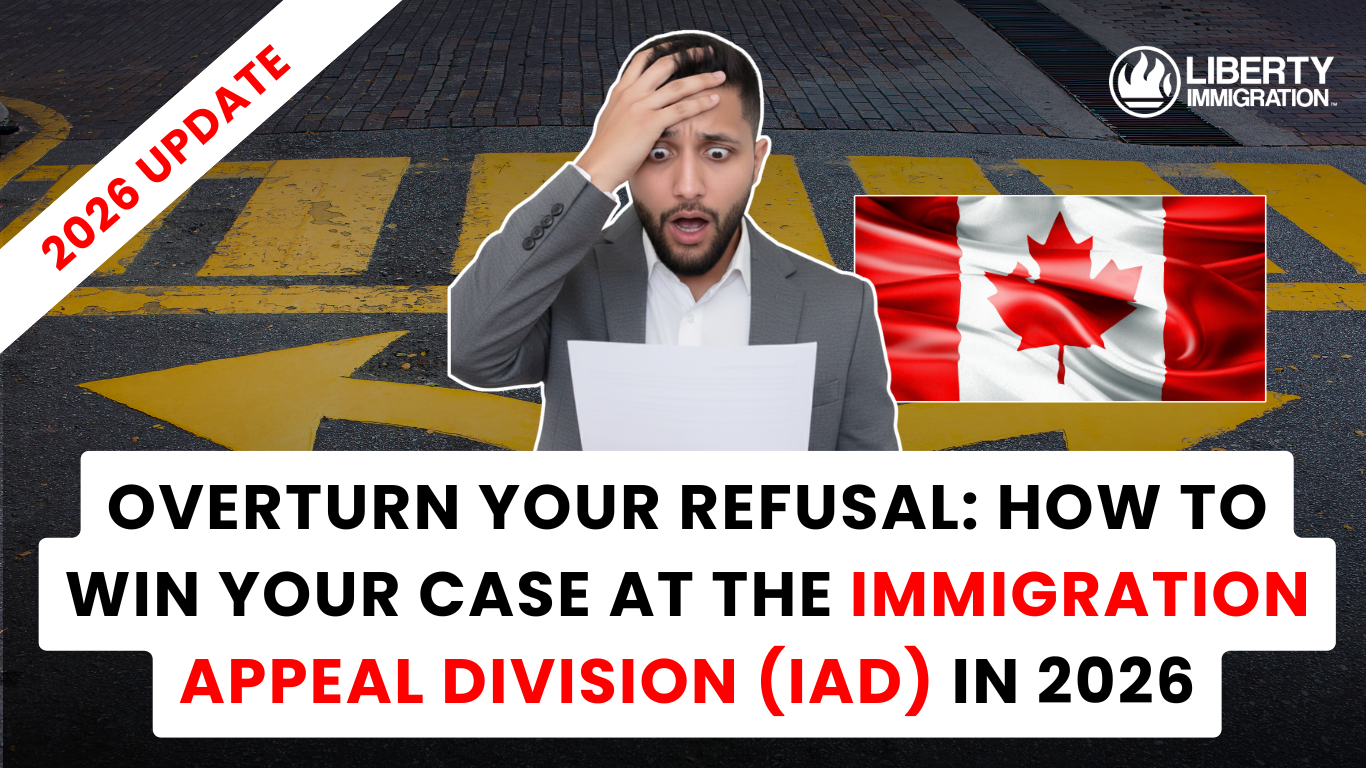
Overturn Your Refusal: How to Win Your Case at the Immigration Appeal Division (IAD) in 2026
Executive Summary: Your Second Chance at Canadian Residency
Receiving a refusal letter for a Spousal Sponsorship, Residency Obligation, or facing a Removal Order is devastating. However, this is not the end of the road. The immigration appeal division (IAD) serves as an independent tribunal where you can legally challenge and overturn decisions made by immigration officers. RCIC Vineet breaks down the 2026 strategies for winning your appeal.
- The 30-Day Deadline: You must file a Notice of Appeal with the immigration appeal division within 30 days of receiving your refusal or removal order to preserve your legal rights.
- De Novo Hearings: IAD hearings are conducted "de novo," meaning you start from scratch and can introduce fresh evidence that the original IRCC officer never saw.
- Humanitarian & Compassionate (H&C) Grounds: Unlike standard IRCC processing, the IAD possesses the equitable jurisdiction to grant your appeal based purely on Humanitarian and Compassionate factors, even if you technically broke immigration rules.
- Licensed Representation: If you hire a paid representative, they must be a member in good standing of a provincial bar or the College of Immigration and Citizenship Consultants (CICC) holding a specific tribunal license.
Overturn Your Refusal: How to Win Your Case at the Immigration Appeal Division (IAD) in 2026
When an officer from Immigration, Refugees and Citizenship Canada (IRCC) or the Canada Border Services Agency (CBSA) rejects your application or issues a removal order, it feels final. However, Canada's legal system features an independent administrative tribunal designed specifically to review and overturn these harsh decisions: the immigration appeal division (IAD).
As a branch of the Immigration and Refugee Board of Canada (IRB), the immigration appeal division operates entirely independently of the immigration department. The decision-makers (Members) are appointed by the Governor-in-Council and have the unique power to look past strict technicalities and evaluate the broader human impact of a refusal.
Whether your Spousal Sponsorship was denied because the officer believed your marriage wasn't genuine, or you lost your Permanent Resident status due to a residency breach, winning at the IAD requires a highly specific legal strategy. Here is your 2026 blueprint for navigating the appeal process.
Has Your PR Been Refused? Book an Urgent IAD Strategy Session Today1. What Cases Does the Immigration Appeal Division Hear?
The immigration appeal division does not hear appeals for temporary visas (like student or visitor visas). Its jurisdiction is strictly reserved for high-stakes permanent residency and inadmissibility matters. In 2026, the IAD handles four primary categories:
| Type of Appeal | Who Can File? | Common Scenarios |
|---|---|---|
| Sponsorship Appeals | Canadian Citizens or PRs who sponsored a family member. | IRCC refused a Spousal Sponsorship, claiming the marriage is a "marriage of convenience" or the principal applicant is medically inadmissible. |
| Removal Order Appeals | Permanent Residents, Protected Persons, or PR Visa holders. | CBSA issued a deportation or departure order due to serious criminality or misrepresentation. |
| Residency Obligation Appeals | Permanent Residents. | An officer abroad determined you failed to live in Canada for 730 days over a 5-year period and revoked your PR status. |
| Minister's Appeals | The Minister of Public Safety. | You won an admissibility hearing at the Immigration Division, but the government disagrees and appeals to the IAD to have you removed. |
You do not have unlimited time to fight back. You must file a formal Notice of Appeal with the immigration appeal division within exactly 30 days of receiving the refusal decision or removal order. Failing to meet this statutory deadline usually results in a complete loss of your appeal rights.
2. The "De Novo" Advantage: Why You Can Still Win
The most powerful aspect of the immigration appeal division is that their hearings are conducted "de novo" (meaning "from the beginning" or "anew").
When an IRCC officer refuses an application, they rely solely on the documents you initially uploaded. At the IAD, the Member reviewing your case is not bound by the original officer's narrow view. Because the hearing is *de novo*, you are allowed to start your story from scratch and introduce entirely new evidence that the original officer never saw.
If your spousal sponsorship was refused because you didn't have enough photos or shared financial documents, you can spend the months leading up to your IAD hearing accumulating robust joint bank statements, comprehensive chat logs, and new witness testimonies. You can bring your spouse, family members, and friends to testify live before the tribunal.
3. The Secret Weapon: Humanitarian and Compassionate (H&C) Evidence
Perhaps the greatest strength of the immigration appeal division is its equitable jurisdiction. Even if the law says you are technically inadmissible (e.g., you did violate your residency obligation or you did commit a criminal offense), the IAD can still let you keep your PR status based on Humanitarian and Compassionate (H&C) grounds.
To win an H&C argument at the IAD, your legal counsel will aggressively prepare evidence demonstrating:
- Establishment in Canada: Strong employment history, homeownership, and community integration.
- Best Interests of a Child (BIOC): The devastating psychological or financial impact your removal would have on a minor child in Canada.
- Hardship in the Home Country: Lack of medical care, poverty, or discrimination you would face if forced to return to your country of origin.
- Family Support: Extensive testimony from Canadian family members who rely on you emotionally and financially.
Not all appeals require a stressful, full-day trial. The immigration appeal division frequently schedules Alternative Dispute Resolution conferences. This is an informal meeting between you, your lawyer, the Dispute Resolution Officer, and the Minister’s Counsel. If your new evidence is strong enough, the Minister's Counsel may agree to concede the appeal on the spot, saving you months of waiting.
4. The Hearing Process and Representation Rules
If your case proceeds to a full oral hearing, it will likely be conducted via videoconference on Microsoft Teams. During the hearing, your lawyer will lead you through your testimony (examination-in-chief) to clearly present your narrative. The Minister’s Counsel (acting as the opposing lawyer for the government) will then cross-examine you.
Because the legal tests required to win are highly complex, navigating an IAD hearing without representation is incredibly dangerous. In 2026, the IRB enforces strict rules regarding who can legally charge a fee to represent you:
- Lawyers: Must be a member in good standing of a provincial or territorial bar.
- Immigration Consultants: As of July 1, 2023, members of the College of Immigration and Citizenship Consultants (CICC) must hold a specialized "RCIC-IRB" license to practice before the tribunal.
The immigration appeal division aims to process cases efficiently, with a general service standard of resolving appeals within 12 months, though complex cases can take longer.
Don't Face the Minister's Counsel Alone
Your IAD hearing is often your final chance to prevent a deportation or reunite with your spouse. Let our specialized, licensed legal team build a fortified Humanitarian and Compassionate argument and represent you at the tribunal.
Book Your IAD Representation Strategy NowTop 20 FAQs: Winning at the Immigration Appeal Division in 2026
Navigating the federal tribunal system is complex. Here are the 20 most frequently asked questions regarding the immigration appeal division.
1. What is the Immigration Appeal Division (IAD)?
The IAD is an independent administrative tribunal, operating within the Immigration and Refugee Board (IRB), responsible for hearing and deciding appeals on immigration matters like sponsorship refusals and removal orders.
2. How much time do I have to file an appeal to the IAD?
You strictly have 30 days from the date you received the refusal letter or removal order to file your Notice of Appeal with the IAD.
3. What does "De Novo" mean in IAD hearings?
De novo means "from the beginning." The IAD Member will look at your case afresh, allowing you to introduce entirely new evidence and testimonies that the original IRCC officer never saw.
4. Can I appeal a rejected visitor visa to the IAD?
No. The immigration appeal division only hears appeals for permanent residency matters, sponsorship refusals, and removal orders against PRs. Temporary visas must be challenged via Judicial Review at the Federal Court.
5. Who acts as the opposing counsel at the IAD?
The Minister's Counsel acts as the respondent. They represent the government and will cross-examine you to defend the original officer's refusal decision.
6. What is Alternative Dispute Resolution (ADR)?
ADR is an informal conference held before a full hearing. If you provide strong new evidence, the Minister's Counsel may agree to settle and grant your appeal without needing a full trial.
7. Are IAD hearings open to the public?
Generally, yes. Immigration Appeal Division hearings are open to the public and media, unless the tribunal explicitly orders a private (in-camera) proceeding.
8. Can any immigration consultant represent me at the IAD?
No. As of July 1, 2023, an immigration consultant must hold a specific 'RCIC-IRB' license to represent clients before the tribunal.
9. How long does an IAD hearing take?
In most standard cases, an oral hearing will be completed within a single day.
10. Can I bring witnesses to my hearing?
Yes. Your lawyer can call witnesses, such as your spouse, parents, or friends, to provide testimony supporting your case and answer questions under oath.
11. What are Humanitarian and Compassionate (H&C) grounds?
H&C grounds allow the IAD to grant an appeal based on fairness and empathy—such as considering the best interests of a child or extreme hardship—even if you technically breached an immigration rule.
12. Can the IAD overturn a Residency Obligation refusal?
Yes. If an overseas officer refused your Travel Document because you failed to live in Canada for 730 days, the IAD can restore your PR status if strong H&C grounds justify your absence.
13. Does the IAD use virtual hearings?
Yes. Since the pandemic, the IRB heavily relies on Microsoft Teams to conduct secure, virtual hearings for appellants across the country and overseas.
14. What is a Minister's Appeal?
If the Immigration Division rules in your favor and allows you to stay in Canada, the Minister of Public Safety can appeal that decision to the IAD. You must then respond to defend your status.
15. How long does the IAD take to issue a decision?
The IAD has an operational service standard goal to finalize appeals within 12 months of the Notice of Appeal being filed, though complex cases can take longer.
16. Can an unpaid friend represent me at the IAD?
Yes, unpaid counsel can be a trusted friend or community member. You must submit a 'Notice of Representation without a Fee' form to the IRB.
17. What if I have mental health concerns and cannot testify well?
You can request an accommodation, or the IAD can appoint a 'Designated Representative'—a person responsible for making decisions in your best interests if you cannot comprehend the proceedings.
18. What is the "My Case" portal?
My Case is the secure online portal used by the Immigration and Refugee Board of Canada (IRB) to exchange documents, submit forms, and track hearing status efficiently.
19. If I miss the 30-day deadline, can I still appeal?
Usually not. Failing to respond or file within the strict 30-day limit generally causes the IAD to declare the appeal abandoned, finalizing the refusal against you.
20. What happens if I win my appeal?
If the IAD allows your appeal, they will overturn the refusal and send your file back to IRCC with instructions to resume processing your permanent residency application.
Trending 2026 IRCC Document & Legal Guides
© 2026 Liberty Immigration. All rights reserved. | Book a Legal Consultation
Related Blogs:
Written By
