
How to Find Canadian Citizenship by Descent Records Using AI
Executive Summary: Unlocking Citizenship with AI
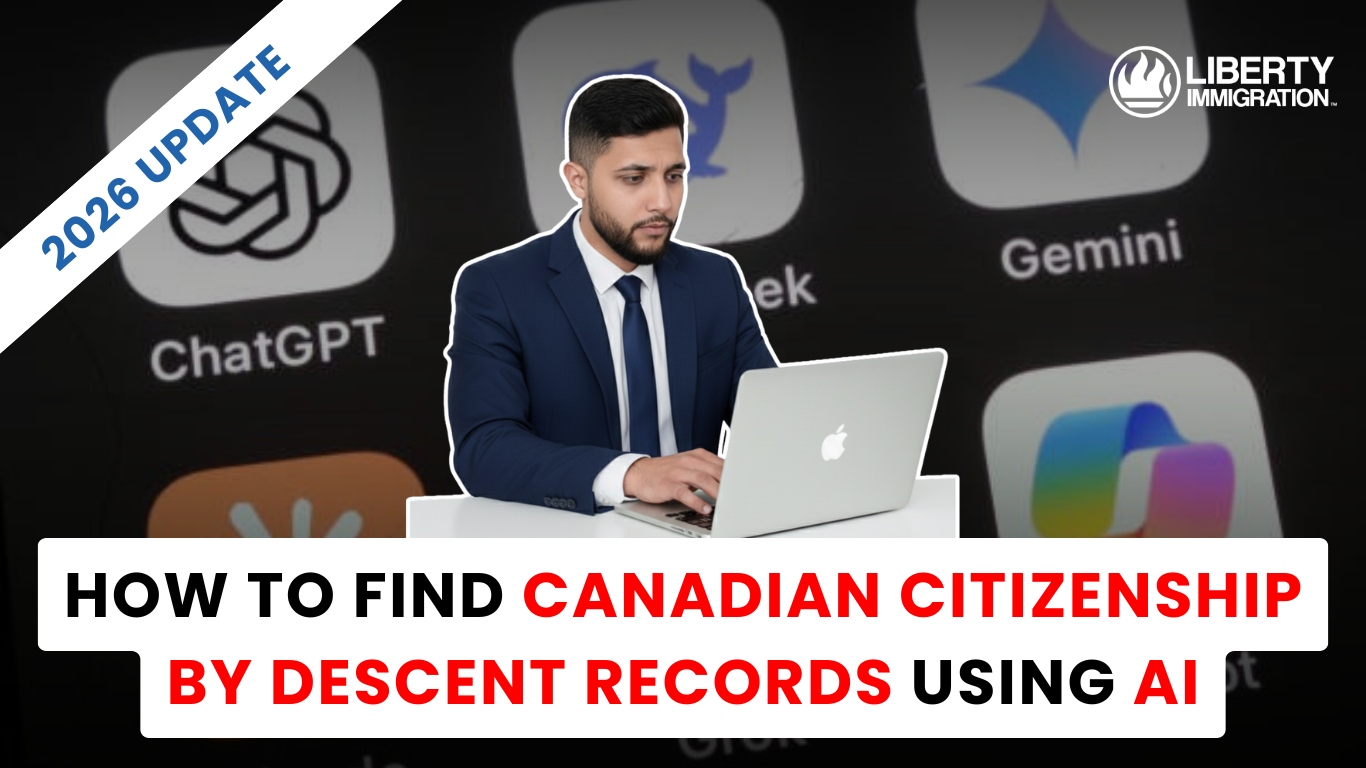
A recent change in Canada's citizenship laws has opened the door for millions of Americans to claim dual citizenship. For one family, finding the necessary Canadian citizenship by descent records took just 30 minutes using generative AI.
- The Discovery: A North Carolina retiree used Google Gemini to locate his great-grandfather in the 1901 Canadian census, confirming his eligibility under the new Bill C-3 laws.
- The Ripple Effect: Because the generational limit was abolished, discovering this single ancestor made 30 extended family members instantly eligible for Canadian passports.
- The AI Strategy: Providing specific context, requesting official sources like Library and Archives Canada, and independently validating the AI's findings are key to a successful search.
30 Minutes, 30 New Canadians: How One Man Used AI to Uncover His Family's Citizenship
When Larry was born in 1955, he was four years too late to meet his great-grandfather, Pierre Jean-Baptiste Robichaud. Pierre, a native of Moncton, New Brunswick, had migrated south to settle in Michigan and was eventually laid to rest in a Lansing cemetery. For decades, the family's Canadian roots were just an interesting piece of genealogical trivia.
The family had absolutely no way of knowing that in 2026, Pierre's legacy would allow Larry and his entire extended family to claim an automatic right to a Canadian passport. By leveraging AI to find Canadian citizenship by descent records, Larry transformed his family's future in just half an hour.
Need Help Finding Your Canadian Records? Book a Consultation1. The Catalyst: Seeking a Path to Canada
Larry, a 30-year veteran of tech giant Oracle, was enjoying a comfortable semi-retirement in Raleigh, North Carolina. He and his wife lived within a few hours' drive of their three adult children.
However, the winter of 2025–2026 brought a tense and harrowing social climate to the US. Amidst ICE raids, widespread protests, and highly publicized shootings (involving names like Keith Porter, Renee Good, and Alex Pretti), Larry grew increasingly concerned. For a mixed-race family with children adopted from Nigeria, the environment felt deeply unsettling.
Larry’s daughter, a trained paramedic, frequently talked about moving to Canada. Unfortunately, the standard economic immigration route was daunting. Applying for Canadian Permanent Residency meant entering a highly competitive "cage match" against 230,000 other highly skilled professionals in the Express Entry pool.
Then, Larry’s wife stumbled upon an article outlining the recent Bill C-3 changes to Canada’s citizenship laws. The new legislation abolished the "first-generation limit." If they could prove a direct line of descent from a Canadian ancestor, Larry and his children were already citizens. But where should they look? How could they find the required Canadian citizenship by descent records?
2. The 30-Minute AI Search
Armed with only his great-grandfather’s name and birthplace, Larry turned to the AI chatbot, Google Gemini.
Instead of manually digging through endless genealogical websites, Larry used Gemini to pinpoint exactly where the official Canadian government kept its historical data. The AI guided him directly to the digitized census records available online through Library and Archives Canada.
Within minutes of browsing the specific databases Gemini suggested, Larry found it. He stared at a grainy, hand-written page from Canada’s 1901 census. Despite the poor legibility of the century-old ink, the entry was unmistakable: Pierre Jean-Baptiste Robichaud. Nationality: Canadian. Profession: Grocer.
This census record was the definitive confirmation they needed. Larry and his children didn’t need to fight through the Express Entry immigration system. Through their descent from Pierre, they were already Canadian citizens. All they had to do was assemble the vital records and apply for a Proof of Citizenship certificate.
3. The Domino Effect: 30 New Canadians
Larry immediately shared the screenshot in his family group chat. The chat exploded. Because Bill C-3 eliminated the generational cut-off for anyone born before December 15, 2025, it wasn't just Larry and his kids who qualified.
There were over 30 extended family members descended from Pierre. With that single 1901 census discovery, every single one of them became eligible for a Canadian passport.
Over the next few days, the family sprang into action:
- Larry researched exactly which Canadian citizenship by descent records were required, identifying the specific provincial archives to request Pierre’s and his daughter’s official baptismal records.
- His wife found a licensed Canadian immigration representative to professionally manage their Proof of Citizenship applications.
- His daughter began researching cities, looking up paramedic union pay rates and licensing procedures in Ontario.
While the official IRCC processing time for Proof of Citizenship applications currently sits at around 10 months, the family's relocation plans came together in a matter of weeks. The destination was set: they were moving to Mississauga, Ontario.
Are You a "Lost Canadian"?
Don't let missing historical documents prevent you from claiming your Canadian passport. Let our licensed experts and genealogists track down your family's vital records.
Book Your Ancestry Assessment Today4. How to Use AI to Find Canadian Citizenship by Descent Records
As a retired tech worker, Larry knew how to effectively prompt an AI to yield accurate, actionable results. If you are beginning your own ancestry search, follow these four strategies to maximize your success and avoid AI "hallucinations."
| AI Prompting Strategy | How to Apply It |
|---|---|
| 1. Give High Context | Chatbots perform better when they understand your end goal. Instead of asking "How do I find Canadian records?", state: "I am an American seeking to prove Canadian citizenship by descent under Bill C-3. What official Canadian archives should I search?" |
| 2. Be Hyper-Specific | Narrow down the parameters. Ask: "What are the best online databases to find a baptismal record for someone born in Moncton, New Brunswick around 1880?" |
| 3. Search for "Sources," Not "Answers" | Do not expect the AI to have your great-grandfather's birth certificate stored in its memory. Ask the AI to identify the institutions (e.g., Library and Archives Canada, BAnQ) that hold the records. |
| 4. Always Validate Independently | AI chatbots can and do make mistakes. Never base your immigration plans solely on a chatbot's response. Use the AI as a map, but verify the actual historical documents with primary sources yourself. |
Claim Your Rightful Citizenship
If you have an unbroken bloodline to a Canadian ancestor, you are legally entitled to a Canadian passport. Contact Liberty Immigration today to have your Canadian citizenship by descent records verified by a professional.
Consult With a Citizenship ExpertTrending 2026 Canadian Citizenship Guides
© 2026 Liberty Immigration. All rights reserved. | Book a Consultation
Related Blogs:


Written By
Vineet Tiwari
Vineet is a caring and creative leader who has lived in India, Oman, UAE, and Canada, giving him a rich multicultural perspective. His commitment to physical fitness keeps him energetic and focused. Vineet's dedication to his clients is evident as he often takes calls on weekends, ensuring they always feel supported and valued. His diverse background and unwavering availability help build strong, trusting relationships with our clients.