
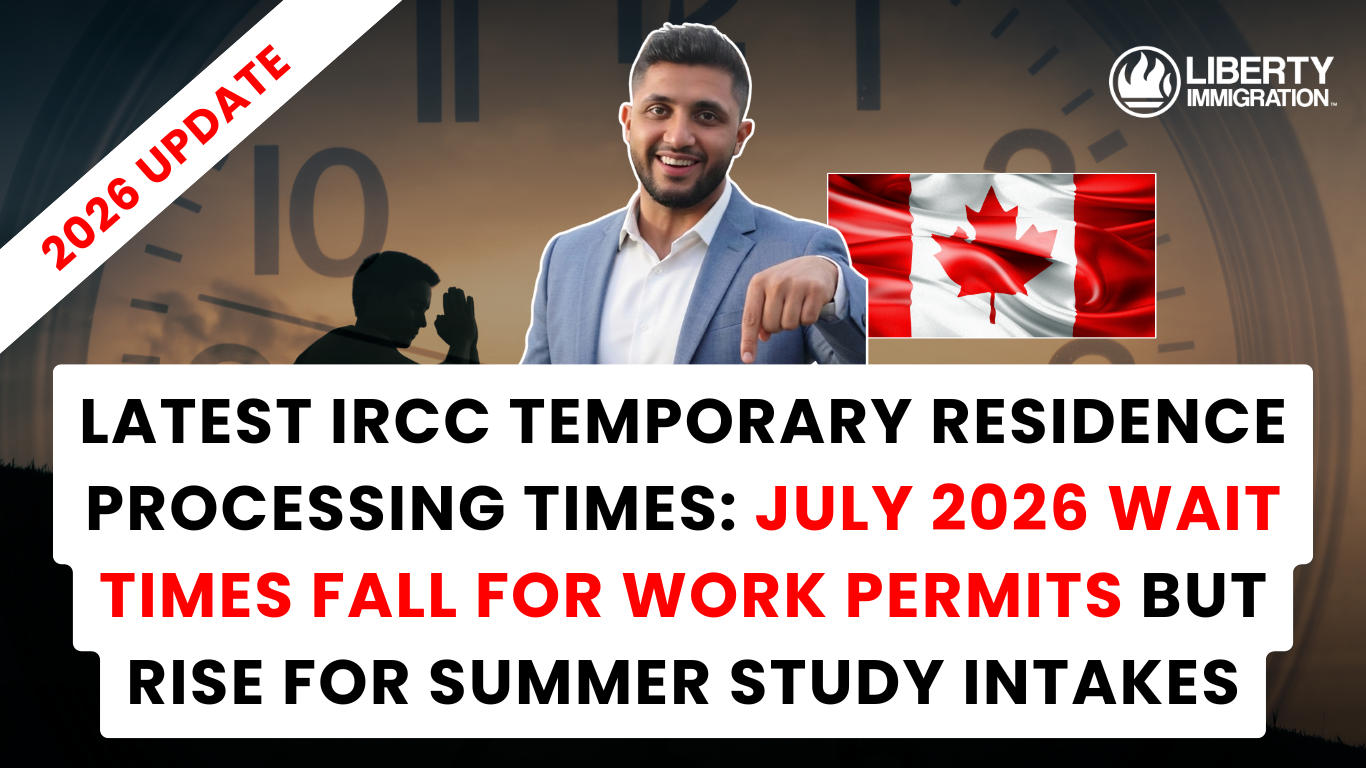
Latest IRCC Temporary Residence Processing Times: July 2026 Wait Times Fall for Work Permits but Rise for Summer Study Intakes
Executive Summary: July 2026 Core Processing Realignment
A comprehensive comparative breakdown of Canada's temporary migration database highlights a striking divide between processing streams as summer operations peak. While in-country workers and specific regional portfolios enjoy an accelerated track, seasonal student intakes are beginning to experience seasonal friction. Review the active operational boundaries finalized in the **July 2, 2026** platform synchronization:
- Historic Closed Permit Acceleration: Turnaround times for in-Canada work permits experienced a significant **15-day drop**, reaching a new annual low.
- The Summer Study Bottleneck: Facing heavy seasonal volume, study permit queues increased by exactly **one week** for applicants applying from both India and within Canada.
- Super Visa Regional Divergence: Indian super visa portfolios experienced an impressive **16-day acceleration**, while United States-based filers faced a steep **19-day delay**.
- Maintained Status Planning Nodes: In-country work permit extensions are tracking at 129 days, requiring strategic execution to ensure candidates remain safely within the 120-day regulatory service standard window.
The July 2026 IRCC Temporary Residence Processing Times Update: Work Permits Hit Annual Lows While Study Permits Face Summer Pressures
For international professionals extending local contracts, corporate hiring managers tracking critical workforce onboarding, and global students preparing for fall semesters, following the weekly data releases from Canada's immigration bureau is an absolute necessity. Because temporary status rules require un-broken compliance lines, unexpected fluctuations in queue speeds can disrupt your relocation plans or alter your maintained status timeline. Keeping your documents aligned with current operational parameters is essential.
The latest official data tracking **ircc temporary residence processing times**, published formally on **July 2, 2026**, shows a major divergence across core visa categories. While the system has successfully slashed backlogs for in-Canada work permit streams and Indian parent tracks, the standard pre-semester influx has introduced noticeable processing delays for study permit applicants. Understanding these precise timeline movements helps you project your exact arrival window with total clarity.
As a leading cross-border immigration consultancy directed by practicing Regulated Canadian Immigration Consultants (RCICs), we analyze these weekly system changes to insulate our clients from processing delays. Navigating the mid-summer processing rush requires checking your specific country of origin against the active processing metrics. This comprehensive update compares the newest July 2 dataset against the previous June 24 baseline, outlines the formal service standards, and details the exact steps needed to protect your file.
Nearing a Permit Expiry Window? Click Here to Schedule an Urgent Status Check with an RCIC1. Work Permit Pipelines: In-Canada Streams Plunge to New Lows
The most encouraging development in the **July 2, 2026** update is the steady, month-long acceleration inside the work permit network. Processing timelines for candidates filing from within Canada dropped by an additional 15 days, landing at their lowest operational level for the entire 2026 calendar year. Internationally, applicants from Nigeria also secured a welcome one-week improvement.
Review the exact country-specific work permit metrics verified across the latest system synchronization:
| Applicant Location Node | Current Processing Speed (July 2, 2026) | Previous Processing Speed (June 24, 2026) | Net Weekly Ingestion Shift |
|---|---|---|---|
| Canada (In-Country Extensions/Initial) | 129 Days | 144 Days | Accelerated: -15 Days (Annual Low) |
| India | 9 Weeks | 9 Weeks | Stable: No Database Drift |
| Pakistan | 5 Weeks | 5 Weeks | Stable: No Database Drift |
| Nigeria | 8 Weeks | 9 Weeks | Accelerated: -1 Week Lower |
| United States | 4 Weeks | 4 Weeks | Stable: No Database Drift |
| Philippines | 8 Weeks | 8 Weeks | Stable: No Database Drift |
While the in-country reduction to 129 days brings significant relief to employers, applicants must note that this timeline still sits slightly above IRCC's internal **120-day service standard** for domestic filings. For outland submissions, the system continues to maintain excellent efficiency, beating the official 60-day global service standard across all tracked key markets like Pakistan, the U.S., and Nigeria.
2. Study Permit Queues: Preparing for the Pre-Semester Influx
Conversely, the **July 2, 2026** dataset serves as a clear indicator that the traditional pre-fall peak has officially arrived. As visa offices manage a massive influx of international student profiles, processing timelines have begun to climb. Both India-based profiles and in-country study extensions experienced a matching one-week increase, while other key tracking hubs remained completely stable.
Review the active study permit waiting metrics enforced across major applicant sectors:
| Applicant Source Country | Current Processing Speed (July 2, 2026) | Previous Processing Speed (June 24, 2026) | Net Weekly Ingestion Shift |
|---|---|---|---|
| Canada | 7 Weeks | 6 Weeks | Delayed: +1 Week Extended |
| India | 5 Weeks | 4 Weeks | Delayed: +1 Week Extended |
| Pakistan | 6 Weeks | 6 Weeks | Stable: No Database Drift |
| Nigeria | 5 Weeks | 5 Weeks | Stable: No Database Drift |
| United States | 5 Weeks | 5 Weeks | Stable: No Database Drift |
| Philippines | 4 Weeks | 4 Weeks | Stable: No Database Drift |
Despite these minor summer increases, the department's processing estimates continue to track well ahead of its formal internal service benchmarks. Both in-Canada extensions (7 weeks / ~49 days) and outland tracks (ranging from 4 to 6 weeks) are currently clearing well within the maximum 120-day and 60-day service standards, confirming that the system is handling the peak volume effectively.
Protect Your Fall Academic Enrollment—Book a Priority Student File Assessment3. Visitor Visas & Super Visas: Radical Regional Divergences
The entries tracking temporary resident visitor visas (TRVs) and parent super visas revealed the most dramatic data shifts in the **July 2, 2026** update. Regular tourist entries shortened their wait times across Canada, India, and Pakistan, while facing slight increases inside Nigeria and the United States.
Review the comparative shifts across the visitor visa registry:
- Canada (In-Country): Slashed by 4 days, dropping to an efficient 38 days.
- Pakistan: Recorded the largest category drop, falling 5 days down to 38 days.
- India: Eased slightly by 1 day, settling at 21 days.
- Nigeria & United States: Climbed slightly, increasing to 56 days and 32 days respectively.
For families leveraging the long-term parent and grandparent option, the **July 2, 2026** update brought highly mixed results. Super visa processing for applicants from India experienced a massive boost, improving by more than two weeks (16 days total) to land at 50 days. Conversely, applicants from the United States faced an unexpected delay, with wait times increasing by nearly three weeks (19 days total) to a current high of 123 days—making it the only region to exceed the official 112-day global service standard.
| Super Visa Sourcing Region | Current Processing Speed (July 2, 2026) | Previous Processing Speed (June 24, 2026) | Net Performance Variance |
|---|---|---|---|
| India | 50 Days | 66 Days | Accelerated: -16 Days Lower |
| Pakistan | 102 Days | 95 Days | Delayed: +7 Days Extended |
| Nigeria | 32 Days | 34 Days | Accelerated: -2 Days Lower |
| United States | 123 Days | 104 Days | Delayed: +19 Days (Exceeds Service Standard) |
| Philippines | 52 Days | 42 Days | Delayed: +10 Days Extended |
Applicants and sponsors must note that under federal immigration guidelines, super visa applications cannot be submitted from within Canada. Profiles must be logged strictly from an outland destination, regardless of the principal sponsor's current location.
4. Technical Analysis: Processing Estimates vs. Service Standards
To safely project your personal immigration timeline, you must look past simple numbers and understand how the department calculates its data. IRCC publishes weekly processing times to help families manage expectations, but these statistics function purely as informational guides and do not guarantee an approval window. The department's metrics combine two data points:
- Historical case data: Tracking past operational velocity to show exactly how long the department required to clear 80% of finalized files.
- Forward-looking calculations: Dynamically shifting metrics based on current application backlogs and the department's processing capacity.
By contrast, **Service Standards** serve a completely separate internal purpose. These benchmarks represent the institutional timelines that IRCC aims to achieve under normal operating conditions. The department’s goal is to finalize 80% of incoming applications within these standard limits. While individual files can frequently exceed or beat these timelines due to operational constraints or specific background factors, tracking the gap between current processing times and service standards is the best way to identify systemic bottlenecks.
Maximize Your Temporary Resident Compliance and Escape Backlog Delays
The data from the **July 2, 2026** update confirms that while in-Canada work permits are experiencing an impressive acceleration, seasonal student intakes and specific super visa regions face growing processing pressures. With portals closely monitored, a single document omission or an un-bridged experience description can cause your application to exceed the service standard window. Let our elite team of professional RCICs perform a detailed pre-filing audit of your application, match your credentials with current standards, and secure your status smoothly.
Book Your Priority Visa Submission Strategy Session NowTop 5 FAQs: Surviving Mid-Summer Processing Changes
1. What are the latest work permit processing times for applicants inside Canada?
As of the **July 2, 2026** update, in-Canada work permit wait times dropped by 15 days down to an active timeline of **129 days**, marking their lowest level this year.
2. Why are study permit processing times increasing for India and Canada?
Timelines increased by exactly one week for both tracks due to the traditional mid-summer surge, as visa offices manage high application volumes ahead of the fall semester.
3. What is the difference between an IRCC processing time and a service standard?
Processing times show how long the department has recently taken to clear 80% of files. Service standards are internal goals setting out how quickly IRCC aims to process files under normal conditions.
4. Which country faced the largest delay for parent super visa processing in July 2026?
The United States faced the longest delay, with super visa processing times climbing by nearly three weeks (19 days) to a current timeline of **123 days**. Code-compliant files from India dropped down to 50 days.
5. Can I submit a parent super visa application from within Canada?
No, absolutely not. Government guidelines explicitly state that super visa applications cannot be initiated or submitted from within Canada; files must be processed through outland channels.
More Helpful Resources on Adjudication Channels and Inflow Controls
- The Timeline Drop: Reviewing the Previous June 24, 2026 Temporary Residence Processing Update
- The Ancestry Shift: Navigating Changing Verification Rules for Family Class Lineage Proofs
- The Explanation Brief: How to Correctly Format Your Case Layout Letter of Explanation PDF
- RCIC Strategy Portal: Schedule an Emergency Status Continuity Vetting with Our Licensed Expert Team
© 2026 Liberty Immigration. All rights reserved. | Book an RCIC Consultation
Related Blogs:

Written By
Vineet Tiwari
Vineet is a caring and creative leader who has lived in India, Oman, UAE, and Canada, giving him a rich multicultural perspective. His commitment to physical fitness keeps him energetic and focused. Vineet's dedication to his clients is evident as he often takes calls on weekends, ensuring they always feel supported and valued. His diverse background and unwavering availability help build strong, trusting relationships with our clients.